





2 October 2026
/ Heather A. Schneider
Rising Bankruptcy Costs Make Efficient Vendor Management More Important Than Ever


As bankruptcy filing activity continues to remain elevated and operational costs increase, creditors and loan servicers are facing another round of expense increases associated with bankruptcy administration.
Beginning December 1, 2026, several bankruptcy court filing fees will increase, followed by an increase in Public Access to Court Electronic Records (PACER) access charges effective January 1, 2027. While the individual fee adjustments may appear relatively modest, organizations managing large bankruptcy portfolios understand that even small increases can have a meaningful impact when multiplied across hundreds or thousands of cases.
These developments highlight the growing importance of partnering with an experienced bankruptcy law firm or bankruptcy servicing provider that can help creditors maximize efficiency, reduce unnecessary costs, and ensure that legal actions are pursued strategically.
Bankruptcy Motion Filing Fee Increases Effective December 1, 2026
Several commonly filed creditor motions will see filing fee increases beginning December 1, 2026.
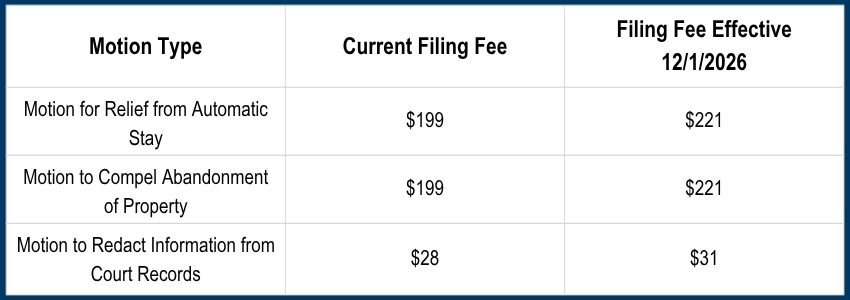
For secured creditors, motions for relief from stay and motions to compel abandonment are often necessary tools for protecting collateral and preserving recovery opportunities. As filing fees increase, each motion decision becomes more important from both a legal and financial perspective.
An experienced bankruptcy partner can help ensure that these motions are filed timely, supported by the appropriate documentation, and pursued only when the anticipated benefit justifies the associated cost.
PACER Costs Increasing January 1, 2027
In addition to court filing fee increases, PACER charges will increase from $0.10 per page to $0.12 per page beginning January 1, 2027 – this is a 20% increase in the cost of accessing federal court records.
For organizations managing bankruptcy matters internally, PACER expenses can quickly accumulate through:
- Daily docket monitoring
- Claims review
- Motion review
- Bankruptcy notice processing
- Case research
- Document retrieval
Creditors handling significant bankruptcy volumes may find that the cumulative impact of increased PACER expenses exceeds the impact of the filing fee increases themselves.
The Hidden Cost of Bankruptcy Administration
Court filing fees and PACER charges are only part of the overall cost of bankruptcy management.
Many creditors continue to devote significant internal resources to:
- Monitoring court notices
- Reviewing bankruptcy filings
- Tracking claims deadlines
- Managing reaffirmation agreements
- Responding to motions and objections
- Processing payment changes and trustee disbursements
- Coordinating legal actions across multiple jurisdictions
As costs continue to rise, organizations should evaluate whether their current bankruptcy processes are delivering maximum efficiency and value.
Why Bankruptcy Expertise Matters
In today's environment, creditors need more than a vendor that simply files documents. They need a partner that understands how to balance compliance, cost control, technology, and recovery strategies.
An experienced bankruptcy law firm can help creditors:
- Reduce unnecessary legal spend through strategic case evaluation
- Leverage automation to minimize manual processing costs
- Ensure critical deadlines are met
- Identify opportunities to protect collateral and maximize recoveries
- Provide nationwide coverage and consistent reporting
- Deliver scalable solutions as bankruptcy volumes fluctuate
Technology-driven bankruptcy servicing models can be particularly valuable as filing fees and administrative costs continue to rise. By combining legal expertise with workflow automation and proactive case management, creditors can often achieve greater efficiency without sacrificing compliance or legal oversight.
Looking Ahead
The upcoming fee increases serve as a reminder that bankruptcy administration costs rarely remain stationary. As court fees, PACER expenses, labor costs, and compliance requirements continue to evolve, creditors should regularly assess whether their bankruptcy strategy is positioned for long-term success.
Organizations that partner with experienced bankruptcy counsel and leverage efficient servicing solutions are often better equipped to manage increasing costs while maintaining strong operational performance and protecting their recovery objectives.
As 2027 approaches, now is an ideal time for creditors and servicers to evaluate their bankruptcy programs, identify opportunities for efficiency, and ensure they have the right partner in place to navigate an increasingly complex and costly bankruptcy landscape.
Our team is constantly monitoring changes within the industry. If you have questions on this topic, or would like to learn more about Weltman’s Bankruptcy Recovery Solutions, feel free to connect with Director of National Bankruptcy Solutions Heather Schneider at any time.
This blog is not a solicitation for business, and it is not intended to constitute legal advice on specific matters, create an attorney-client relationship or be legally binding in any way.
